SELF-MLD BASICS
- Jun 24
- 3 min read
BEFORE YOU BEGIN, REMEMBER THE BASICS
✔️ Use light pressure
✔️ Move slowly
✔️ Stretch the skin rather than sliding over it
✔️ Always clear the main drainage pathways first
✔️ Work in a calm, relaxed environment
✔️ Stop if anything feels painful or uncomfortable
STEP 1
SETTLE INTO YOUR BODY
✔️ Begin by sitting or lying comfortably.
✔️ Relax your shoulders, jaw, and hands.
✔️ Take 5 slow diaphragmatic breaths, allowing your belly to gently rise as you inhale and soften as you exhale.
✔️ This helps calm the nervous system and supports lymphatic flow.
STEP 2
CLEAR THE MAIN DRAINAGE PATHWAYS
Before working on the arms, legs, or swollen areas, prepare the lymphatic system by clearing the main drainage pathways.
Gently clear the main drainage pathways:
Above the collarbones
The neck
Below the collarbones
The armpits
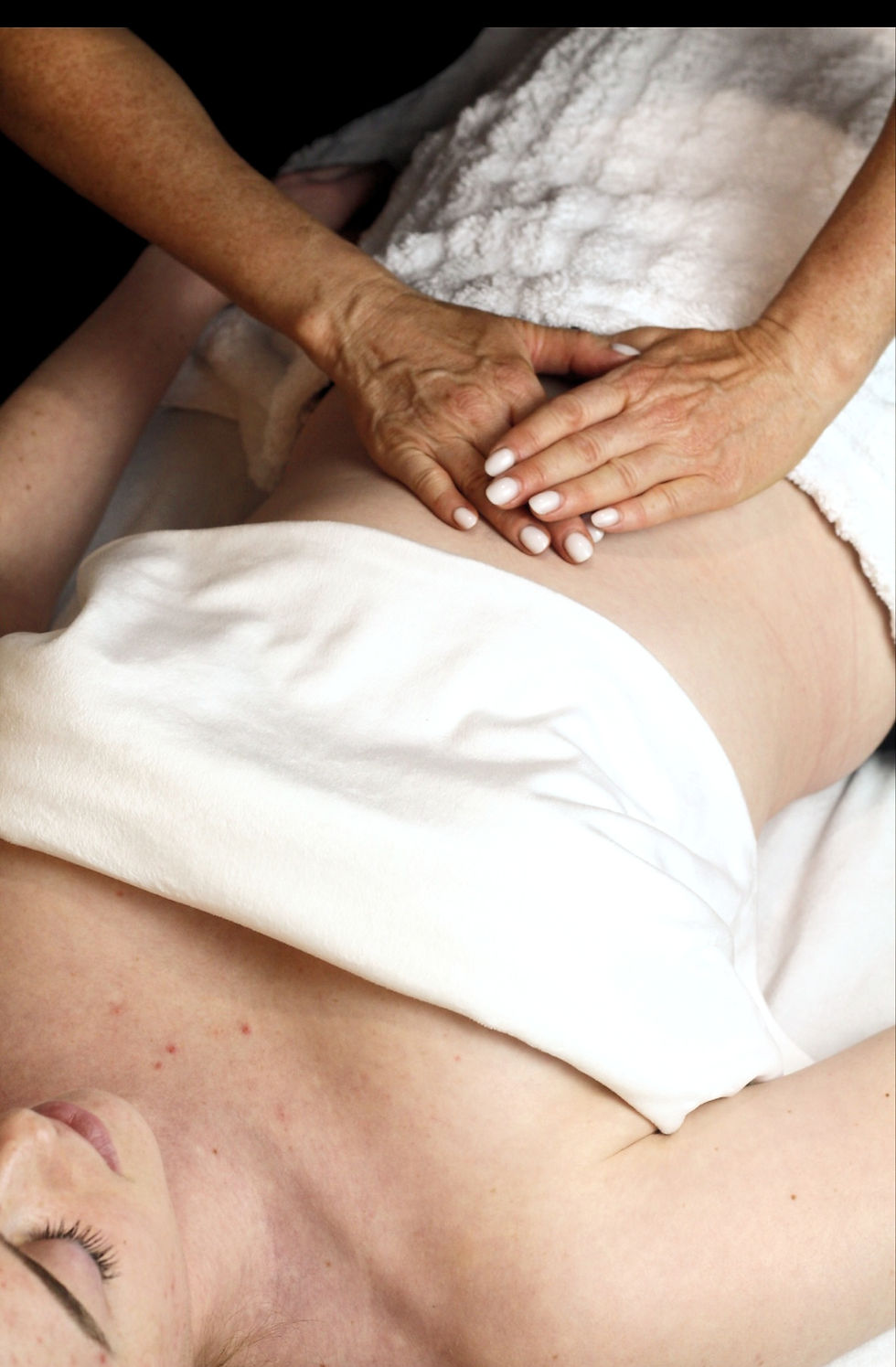
The abdomen
The groin
Perform each area 5–10 times using light, rhythmic movements.
STEP 3
WORK FROM THE CENTRAL AREAS OUTWARDS
Once the main drainage pathways are cleared, begin working on the area closest to the body first.
For example, if working on the legs:
Clear the groin first
Then work the upper thigh
Then the knee area
Then the lower leg
Then the ankle
Then the foot if required
This helps create a clear pathway for fluid to move.
STEP 4
USE GENTLE, RHYTHMIC STROKES
Place your hand flat on the skin.
Gently stretch the skin in the direction of drainage, then release.
Each movement should have two parts:
A gentle stretch - this should take around 2 seconds
A soft release - this should take 1 second
The release phase is important because it allows the lymphatic vessels to refill and continue moving fluid.
STEP 5
KEEP PRESSURE LIGHT
✔️ MLD should never feel like a deep massage.
✔️ You should not feel pain, bruising, heat, or strong redness.
✔️ If you notice these signs, reduce your pressure or stop and rest.
✔️ More pressure does not mean better drainage.
STEP 6
FINISH WITH CENTRAL CLEARANCE
At the end of your routine, return to the main drainage areas.
Gently clear the main drainage pathways:
Above the collarbones
The neck
Below the collarbones
The armpits
The abdomen
The groin
Perform each area 5–10 times using light, rhythmic movements.
This helps support continued lymphatic flow after your session.
SELF-MLD FREQUENCY
✔️ MLD can be practised regularly, depending on your needs and comfort.
✔️ A short 5-10-minute routine may be helpful on busy days.
✔️ A longer routine of 15-20 minutes may be used when you have more time or feel more congested.
✔️ Consistency is more important than duration.
WHEN TO AVOID SELF-MLD
Do not perform self-MLD if you have:
An active infection or cellulitis
A suspected blood clot
Sudden unexplained swelling
Uncontrolled heart failure
Significant kidney disease
A new unexplained lump
Severe pain that has not been assessed
Seek medical advice if you are unsure whether MLD is appropriate for you.
DURING A FLARE-UP
If your body feels inflamed, painful, or highly sensitive, reduce the intensity of your routine.
Focus on:
✔️ Deep breathing
✔️ Above the collarbones
✔️ Neck
✔️ Abdomen
✔️ Gentle central clearance
Avoid working directly over areas that feel too painful or reactive.
AFTER SELF-MLD
After self-MLD, you may notice:
✔️ A lighter feeling in the limbs
✔️ Less tightness
✔️ Improved comfort
✔️ Increased urination
✔️ A sense of calm or relaxation
Drink water, move gently, wear loose, comfortable clothing and rest if needed.
MLD is not about force.
It is about gentle, consistent support for your lymphatic system.
Clear the pathways first, use light pressure, move slowly, and listen to your body.
Small, regular sessions can become a powerful part of your lipoedema self-care routine.
📌 Disclaimer:
This article is for educational purposes only and is not intended to replace professional medical advice, diagnosis, or treatment. Always consult your healthcare provider before making changes to your diet, exercise, or healthcare routine.


Comments